By Mark Creech, Op-ed Contributor Tuesday, April 09, 2024
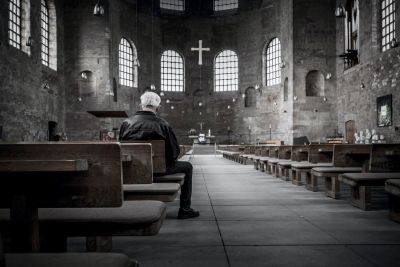
There’s a charming old tale about three pastors hailing from the American South who found themselves sharing lunch at a quaint diner.
One of the pastors spoke up, a furrow of concern etched on his brow. “You know, ever since summer descended upon us, I’ve been grappling with a rather vexing issue at my church. Bats — countless bats — have taken up residence in our loft and attic. I’ve exhausted every conceivable method to rid ourselves of them — noise, sprays, traps, even enlisted the help of felines — but alas, they persist.”
A sympathetic nod passed among the trio as another pastor chimed in, his burden carried a similar tone. “Indeed, I share your plight. Our belfry and attic are overrun with bats numbering in the hundreds. I’ve resorted to extreme measures, even resorting to fumigation, yet they remain undeterred in their residency.”
Get Our Latest News for FREE
Subscribe to get daily/weekly email with the top stories (plus special offers!) from The Christian Post. Be the first to know.Subscribe
Then came the third pastor, a twinkle in his eye betrayed a hint of mischief. “Ah, well, I took a rather unconventional approach with the bats that plagued the heights of our church,” he said. “I performed baptisms on them, and since then, they only grace us with their presence during Christmas and Easter.”
Concerns about regular church attendance have always challenged most faith leaders. However, according to a recent Gallup poll, a decline in consistent church attendance is at an all-time low. The survey, conducted from 2021 to 2023 with over 32,000 participants, reveals that only 30% of U.S. adults are steady in their church attendance. Protestant churches and non-denominational groups were among the highest at 44%, while Catholics were at 33%.
Notably, there has been a significant drop over the past two decades, particularly among Catholics, whose regular attendance fell by a whopping 12%. The decline is attributed largely to the rise in Americans with no religious affiliation, which more than doubled from 9% to 21%.
 Red Soul